Disclosure: this post contains affiliate links. If you buy through them, we may earn a commission at no extra cost to you.
A kerosene heater is one of the oldest ways to keep a room warm when the power goes out, and it still works. It needs no outlet, no battery and no gas line. But it burns fuel inside your living space, so it only stays a good idea if you follow a short list of rules every single time.
Quick pick: safer ways to stay warm and fed when the power is out
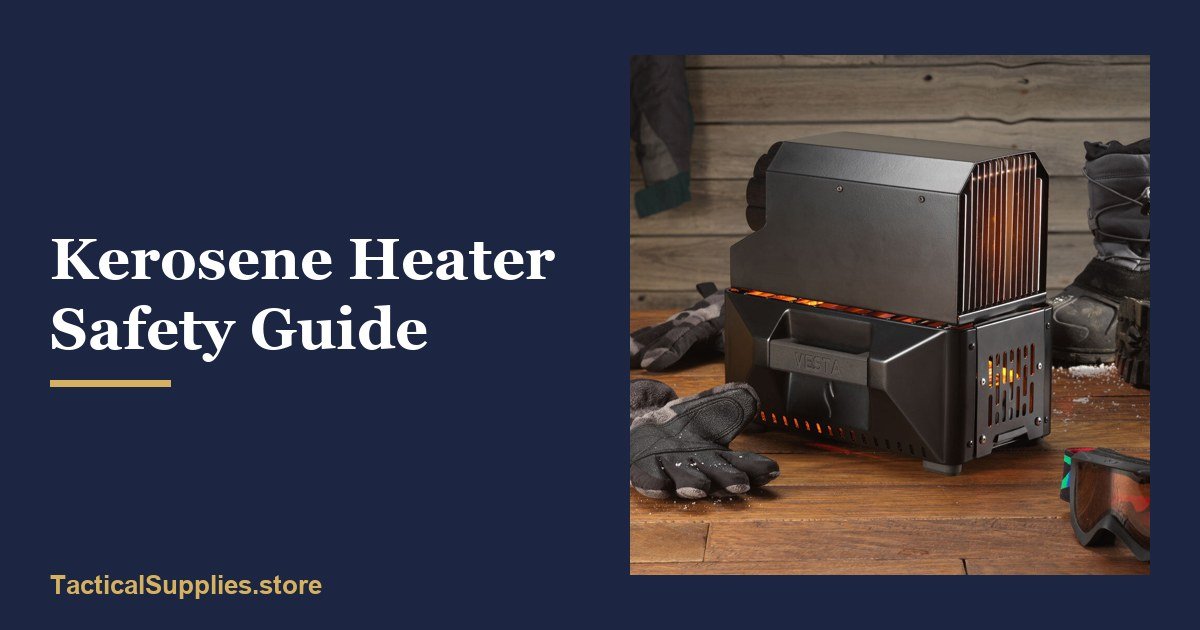
No-electric heat: VESTA Indoor Heater & Stove
No electricity needed and doubles as a stove. Use it with ventilation.
Check today’s price
Phones, lights, CPAP: Grid Doctor 300 Solar Generator
320Wh battery with a 100W solar panel, under 9 pounds.
Check today’s price
Food: 1-Week Food Supply Ammo Can
2,000+ calories a day for one person for a week, shelf life of up to 25 years.
Check today’s price
This guide covers how these heaters work, the safety rules from the U.S. Consumer Product Safety Commission (CPSC) and fire officials, where they are not allowed at all, and when a different kind of backup heat makes more sense for your family.
How a kerosene heater works
Most portable models are unvented. A wick draws liquid kerosene up from a tank, the top of the wick burns, and the heat and combustion gases go straight into the room. That is why they warm a space so quickly, and also why ventilation matters so much.
Burning any fuel indoors uses up oxygen and releases carbon monoxide (CO), which you cannot see or smell. The CDC says more than 400 Americans die each year from unintentional CO poisoning not linked to fires. A heater that is clean, adjusted correctly and fed the right fuel produces less pollution, but no unvented heater produces zero.
7 kerosene heater safety rules from the CPSC and fire officials
The CPSC prints a warning label for these heaters, and local fire departments repeat the same basics. Here they are in plain English.
- Burn only 1-K kerosene. The CPSC says never to use gasoline or any fuel other than 1-K kerosene. A fire department in Ohio notes that the leading cause of kerosene heater fires there is fuel accidentally contaminated with gasoline. If fuel looks discolored or smells like gasoline, do not use it.
- Store it in a blue container marked “Kerosene.” Never use a red can, which people associate with gasoline, and never pour kerosene into a container that once held gasoline. Keep it away from other fuel containers.
- Refuel outdoors, only when the heater is off and cool. The CPSC warns never to fuel the heater while it is running or hot. Fire officials suggest filling to about 90% because cold kerosene expands once you bring it into a warm house.
- Keep 3 feet of clearance. Keep the heater at least three feet from furniture, curtains, bedding and clothing, and out of hallways and doorways so it never blocks your way out.
- Ventilate. The CPSC label says to operate the heater with the doors of the room open. Fire officials also suggest keeping a window slightly open.
- Never run it while you sleep or leave it unattended. Turn it off before bed and whenever you leave the room.
- Install a battery CO alarm. The CDC recommends battery-operated or battery-backup CO detectors near every sleeping area. Check the batteries when the clocks change in spring and fall.
The CPSC label also says to keep the wick and heater clean, to run it only at the recommended flame height, and to keep children away from hot surfaces. If a fire starts, get everyone out and call the fire department. Do not move the heater or throw water on it.
Where kerosene heaters are not allowed
Before you buy one, check your local rules. In Massachusetts, state law says no person shall use, allow to be used, sell or offer for sale any unvented liquid-fired space heater, which covers the typical portable kerosene heater. Many landlords, apartment leases and local fire codes restrict them too. The CPSC label itself tells owners to follow all applicable code requirements.
If you rent, ask your landlord first. If you live in a small apartment with poor airflow, an unvented heater is a hard fit even where it is legal.
Signs of carbon monoxide trouble
The CDC lists the most common CO symptoms as headache, dizziness, weakness, upset stomach, vomiting, chest pain and confusion. People often mistake them for the flu. If more than one person in the house feels sick at the same time while a fuel-burning heater is running, that is a red flag.
- Turn the heater off.
- Get everyone, including pets, outside into fresh air.
- Call 911 or Poison Control at 1-800-222-1222.
Never ignore a CO alarm. The CPSC’s advice is simple: get outside immediately, then call 911.
Is a kerosene heater the right backup heat for you?
It depends on your home, your local rules and how careful your household is. Here is an honest comparison of the common options for a winter outage.
Kerosene
Strong heat output and no electricity needed. The tradeoffs are fuel odor, storing a liquid fuel, outdoor refueling in the cold, CO risk and legal limits in some places.
Canned heat
The VESTA Self-Powered Indoor Space Heater and Stove runs on InstaFire 6-Hour Canned Heat+ instead of liquid fuel. According to My Patriot Supply, it warms areas up to 200 square feet, its fan runs off the unit’s own heat with no batteries, and each can lasts up to 6 hours (three cans are included). It is designed for indoor use with adequate ventilation, so the same fresh-air and CO alarm rules still apply. It is not meant for whole-home heating or large open areas, but it doubles as a stove. You can read more in our guide to safe indoor non-electric heaters.
Warming centers and layering up
Ready.gov advises going to a community location with power if temperatures are extreme. Picking one warm room, closing the doors to others and layering blankets costs nothing. Our post on how to stay warm without power covers those tricks in detail.
What never to use
Ready.gov and the CDC both say never to heat your home with a gas stove or oven. The CDC also warns against running a generator, charcoal grill or camping stove inside a home or garage.
Build the rest of your outage kit around your heat source
Heat is one piece. During a long winter outage you also need light, a way to charge phones and a CO alarm with fresh batteries, plus food that does not need a working kitchen.
- Power for small devices: the Grid Doctor 300 Solar Generator has a 320Wh battery and 300W output for phones, lights, radios and small devices, and it comes with a 100W solar panel. Be clear on its limits: the maker says it is not designed for space heaters or full-size refrigerators.
- Food: the 1-Week Food Supply Ammo Can provides 2,000+ calories per day for one person for a week, with a shelf life of up to 25 years. Most meals need water and heat, which is where a stove like the VESTA comes in.
For the full checklist, see our power outage emergency kit guide, and our overview of emergency heating without electricity.
Want to go deeper? Read How to Choose a Generator for Power Outages.
Want to go deeper? Read Indoor Propane Heater Safety.
Frequently asked questions
Is it safe to use a kerosene heater indoors?
It can be used indoors where local law allows, but only with ventilation, the right fuel and a working CO alarm. The CPSC label says to operate it with the doors of the room open, use only 1-K kerosene and keep it three feet from furniture or clothing. Never sleep with it running.
Can I put diesel or gasoline in a kerosene heater?
No. The CPSC says never to use gasoline or any fuel other than 1-K kerosene. Even a small amount of gasoline contamination can cause an uncontrolled fire.
Why does my kerosene heater smell?
Some odor is normal at lighting and shutdown, but a strong smoky smell can point to the wrong fuel, a dirty wick or a flame set too low. The CPSC advises using only 1-K kerosene, running at the recommended flame height and keeping the wick clean. If anyone feels sick, shut it off and get outside.
Are kerosene heaters legal everywhere?
No. Massachusetts bans the use and sale of unvented liquid-fired space heaters, and many local codes and leases limit them. Check with your local fire department before buying one.
The bottom line
A kerosene heater can carry a family through a cold outage, but it is a tool with rules, not a set-and-forget appliance. Use 1-K fuel only, refuel outside, keep three feet of space, crack a window, turn it off at bedtime and put a battery CO alarm near every bedroom. If your home, lease or state does not suit one, a canned-heat unit or a warm-room plan can fill the gap.
Sources: CPSC Safety Alert: CPSC Stresses Kerosene Heater Safety, CPSC: Stay Safe While Staying Warm, Northwood (Ohio) Fire Department: Kerosene Heater Safety, Massachusetts General Laws c. 148, s. 25B, CDC: Carbon Monoxide Poisoning Basics, CDC: Protect Yourself During a Power Outage, Ready.gov: Power Outages. Product details are from My Patriot Supply product pages as of October 27, 2026.