Disclosure: this post contains affiliate links. If you buy through them, we may earn a commission at no extra cost to you.
An indoor propane heater can keep one room livable when a winter storm knocks out the power. The catch is in the first word: “indoor.” Propane heaters are sold for both indoor and outdoor use, they look alike on the store shelf, and mixing them up is one of the fastest ways to fill a home with carbon monoxide.
Quick pick: heat, power and food for a winter outage
No-electric heat: VESTA Indoor Heater & Stove
No electricity needed and doubles as a stove. Use it with ventilation.
Check today’s price
Phones, lights, CPAP: Grid Doctor 300 Solar Generator
320Wh battery with a 100W solar panel, under 9 pounds.
Check today’s price
Food: 4-Week Emergency Food Supply
Feeds one person for four weeks or a family of four for one week.
Check today’s price
Here is how to tell them apart, what safety features to look for, the rules state and federal safety officials recommend, and when another heat source is the better call.
What makes an indoor propane heater different
Every propane flame uses oxygen and gives off combustion gases, including carbon monoxide (CO). A heater approved for indoor use is designed to burn cleanly in a room and to shut itself off when conditions get unsafe. A patio heater or “outdoor only” unit is not.
The North Carolina Department of Agriculture, which oversees propane safety in that state, puts it bluntly: heaters specified for outdoor use will cause a more rapid build-up of carbon monoxide than one rated for indoor use. Its one takeaway for consumers is never to use outdoor heaters indoors. Read the box and the manual before you buy, and confirm the heater is rated for the way you plan to use it.
Features to look for in an indoor propane heater
Oxygen depletion sensor (ODS)
The North Carolina agency says any heater used indoors should have an oxygen depletion sensor. The ODS shuts the burner off before it uses too much of the oxygen in the room. It also gives a warning worth repeating: as oxygen drops, the heater can produce a higher concentration of CO. An ODS is a backstop, not a reason to skip ventilation or a CO alarm.
Tip-over shutoff and a stable base
The CPSC says portable heaters belong on a stable, level surface. A tip-over switch adds a second layer of protection if a child, pet or careless foot knocks the unit over.
The right size for the room
Buy a unit sized for the room you plan to heat, not the whole house. A smaller space with a cracked window is safer and warmer than a big heater straining against an open floor plan.
7 indoor propane heater safety rules
- Use only heaters rated for indoor use. Never bring a patio heater, construction heater or outdoor-only unit inside.
- Ventilate. The North Carolina agency warns that running a propane heater in a tight space with little ventilation risks a build-up of CO. Follow the maker’s instructions on fresh air, and crack a window if they call for it.
- Install battery CO alarms. The CDC recommends battery-operated or battery-backup CO detectors near every sleeping area. The CPSC adds one on each level of the home, tested monthly.
- Keep 3 feet of clearance. The CPSC says to keep portable heaters at least three feet from beds, curtains, clothes, papers and sofas.
- Never sleep with it running or leave it unattended. The CPSC is clear on this one. Turn it off before bed or before leaving the room.
- Change cylinders only when the heater is off and cool. The CPSC says never to refuel a fuel-burning heater while it is in use, and to let it cool first.
- Keep kids and pets away. Surfaces get hot. Supervise anyone small around it.
Carbon monoxide: symptoms and what to do
According to the CDC, more than 400 Americans die from unintentional CO poisoning not linked to fires each year, and more than 100,000 visit an emergency room. The most common symptoms are headache, dizziness, weakness, upset stomach, vomiting, chest pain and confusion, which people often mistake for the flu.
The North Carolina agency notes that you should not rely on symptoms in place of a detector. If the alarm sounds or people feel ill, turn the heater off, get everyone outside and call 911. Poison Control is 1-800-222-1222.
What never to use for indoor heat
- Your gas oven or stove. Ready.gov and the CDC both say never to heat a home with a gas range or oven.
- Generators, grills and camp stoves. The CDC says never to use a generator, charcoal grill, hibachi, lantern or portable camping stove inside a home, tent or camper.
- Outdoor-rated propane heaters. Covered above, but it bears repeating.
If the cold becomes dangerous, Ready.gov advises going to a community location that has power. Your local officials can tell you which warming centers are open.
An indoor propane heater vs. other backup heat
Propane is not your only choice. Here is how it stacks up.
Propane
Good heat output, no electricity, and small cylinders are easy to find. The downsides are CO risk, the need for ventilation and the job of storing extra fuel safely according to the cylinder and heater instructions.
Canned heat
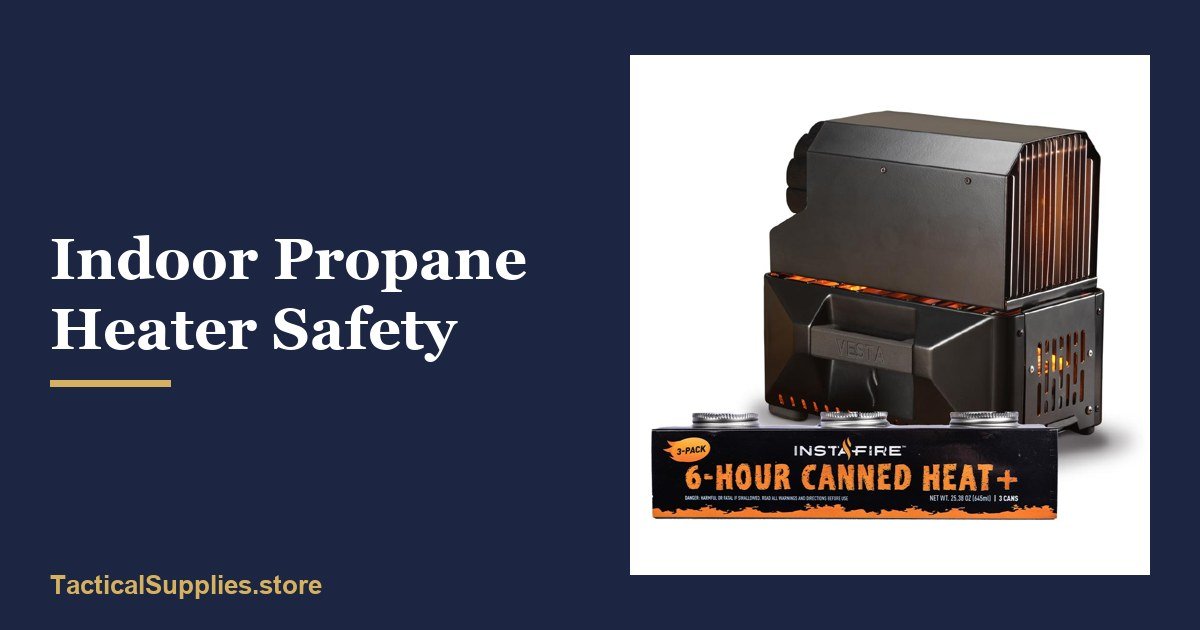
The VESTA Self-Powered Indoor Space Heater and Stove skips propane tanks entirely and burns InstaFire 6-Hour Canned Heat+. My Patriot Supply lists it as warming areas up to 200 square feet, with a fan that runs off the unit’s own heat, no batteries required. It weighs 7.6 pounds and doubles as a cooking surface. It is designed for indoor use with adequate ventilation, so keep the window cracked and the CO alarm on. It is a fit for a bedroom or small living room, not a whole house.
Kerosene
Strong heat but a liquid fuel with strict rules, and it is banned outright in some places. See our emergency heating without electricity guide for a wider comparison.
Our roundup of the best emergency indoor heaters for power outages goes deeper on the options.
Round out your winter outage plan
A heater keeps one room warm. The rest of the plan keeps everyone fed, informed and in touch.
- Charging and light: the Grid Doctor 300 Solar Generator pairs a 320Wh battery with a 100W solar panel for phones, lights, radios and small devices. It is not built to run space heaters or a full-size fridge, so do not plan on it for heat.
- Food that skips the kitchen: the 4-Week Emergency Food Supply feeds one person for four weeks or a family of four for one week at 2,000+ calories a day. Meals need water and heat, so plan for both.
For a full checklist, see our power outage emergency kit and winter storm emergency kit guides.
Want to go deeper? Read Kerosene Heater Safety Guide.
Frequently asked questions
Is it safe to use an indoor propane heater?
It can be, if the heater is rated for indoor use, has an oxygen depletion sensor, gets the ventilation its maker calls for, and you have working battery CO alarms. Never sleep with it running.
Can I use a propane heater in a bedroom?
The CPSC says never to leave a portable heater on while sleeping. You can warm the room before bed, then turn the heater off and rely on blankets and layers overnight.
Does an oxygen depletion sensor detect carbon monoxide?
No. An ODS reacts to low oxygen, not CO. The North Carolina Department of Agriculture warns that CO can rise as oxygen falls, which is why a separate CO detector is essential.
Can I use my patio heater inside during an outage?
No. Outdoor-rated heaters build up CO faster than indoor-rated ones. Keep them outside.
The bottom line
An indoor propane heater is a solid backup for a cold outage when you buy the right kind and use it the right way. Look for an indoor rating and an oxygen depletion sensor, keep three feet of space, crack a window, put CO alarms near every bedroom and turn it off at night. Pair it with food, light and a charging plan, and a winter blackout becomes a hassle instead of a crisis.
Sources: N.C. Department of Agriculture: Propane Heater Safety, CPSC: Stay Safe While Staying Warm, CDC: Carbon Monoxide Poisoning Basics, CDC: Protect Yourself During a Power Outage, Ready.gov: Power Outages. Product details are from My Patriot Supply product pages as of October 27, 2026.