Disclosure: this post contains affiliate links. If you buy through them, we may earn a commission at no extra cost to you.
A power outage is the emergency most American families will actually face. Storms, ice, heat waves and overloaded grids knock out power every year, and some outages last days, not hours. A simple power outage emergency kit turns a scary, uncomfortable week into an inconvenient one.
Quick pick: the 3 things that matter most when the power goes out
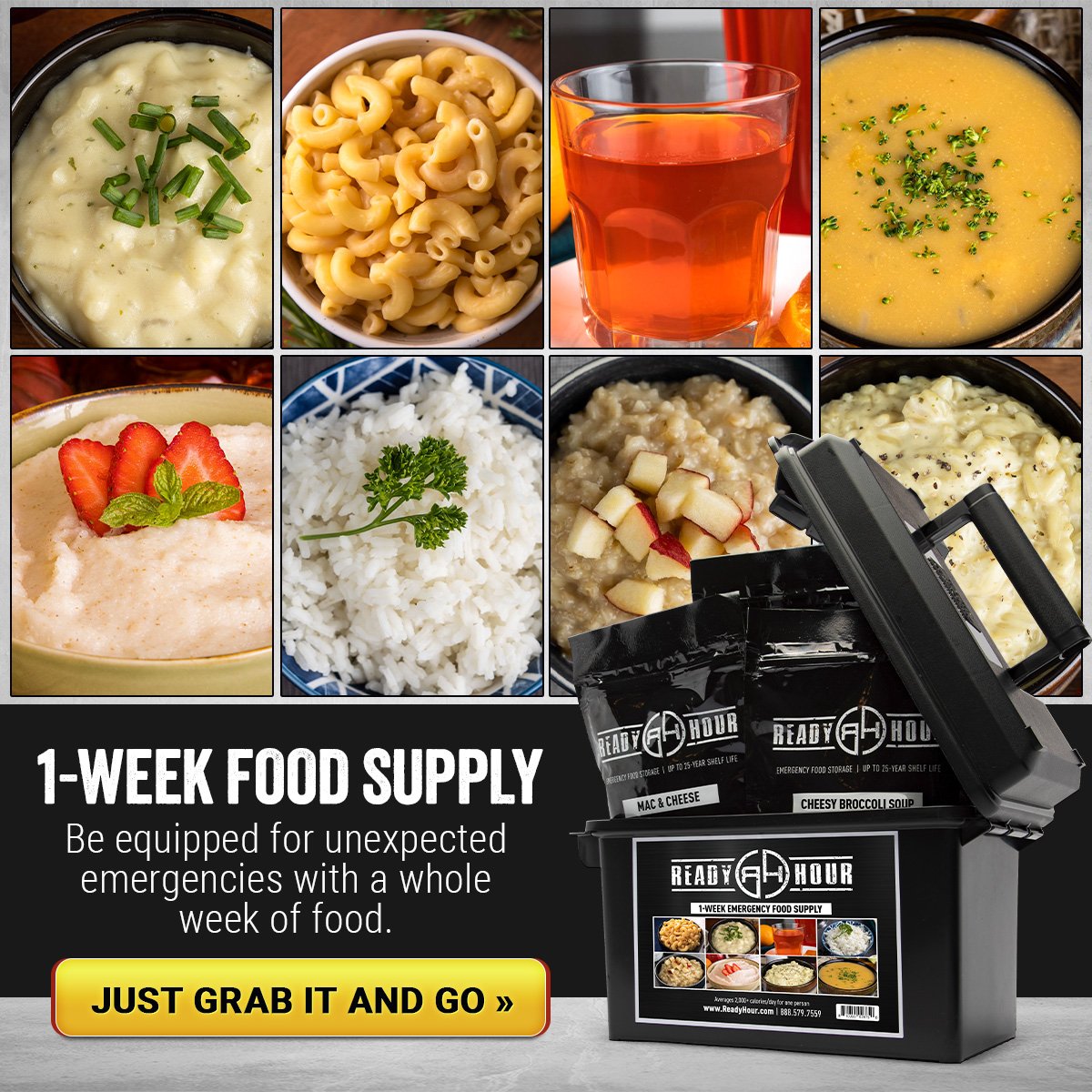
Food: 1-Week Food Supply Ammo Can
Grab-and-go, 14,860 calories, shelf life of up to 25 years.
Check today’s price
Heat and cooking: VESTA Indoor Heater & Stove
No electricity needed and doubles as a stove. Use it with ventilation.
Check today’s price
Phones, lights, CPAP: Grid Doctor 300 Solar Generator
320Wh battery with a 100W solar panel, under 9 pounds.
Check today’s price
This guide covers exactly what to put in your power outage emergency kit, how much of each thing you need, and which pieces are worth buying versus what you already own.
Why more families are building a power outage emergency kit right now
On September 30, Defense Secretary Pete Hegseth announced FORTRESS America, an initiative to make major U.S. military bases able to run on their own power instead of the civilian grid. His reason was simple: bases get about 99% of their electricity from the commercial grid. According to Pentagon documents reviewed by Fox News, major bases in the continental U.S. are being asked to plan to sustain essential operations for at least 90 days on their own, including power, water and fuel. The Pentagon has not publicly released the full memo, and Snopes rates the reporting “mostly true.”
Around the same time, the U.K. government urged families to keep a stock of food and water at home. You don’t need to expect the worst to see the point. If the military is planning for long outages, a few days to a few weeks of supplies at home is a reasonable plan for any family.
The 5 parts of a power outage emergency kit
Think in terms of what stops working when the power goes out: lights, heat or cooling, the fridge, the stove, phone charging, and for many homes, the water pump. A good power outage emergency kit covers each one.
1. Food that doesn’t need a fridge
Your refrigerator keeps food safe for about 4 hours without power, and a full freezer for about 48 hours if you keep the door closed (USDA guidance). After that, you need food that stores at room temperature and is easy to prepare.
- Short outages (up to a few days): canned goods, peanut butter, crackers, granola bars and a manual can opener.
- Longer outages: long-shelf-life emergency meals that only need water and heat.
A good starting point is the My Patriot Supply 1-Week Food Supply Ammo Can. It provides 14,860 calories (2,000+ per day for one person for a week, or two people for 72 hours), has a shelf life of up to 25 years when stored properly, and needs about 3 gallons of water to prepare everything. The ammo can makes it easy to grab and go.
For a household, the 4-Week Emergency Food Supply covers one person for four weeks, two people for two weeks, or a family of four for one week. It includes 16 food and drink varieties (250 servings) and needs about 9 gallons of water to prepare.
2. Water, and a way to make more
FEMA recommends storing at least one gallon of water per person per day, for drinking and basic sanitation. For a family of four, a 3-day supply is 12 gallons. A two-week supply is 56 gallons, which is a lot of jugs.
That’s why a filter matters. If your power is out long enough, you may need to filter water from another source, or your tap water may become unsafe. The Alexapure Pro Water Filtration System is gravity-powered, so it works without electricity or plumbing. It has 2.5-gallon chambers, is made in the USA, and the maker says it has been tested against 220+ contaminants.
Don’t forget: emergency meals need water too. Count it when you plan.
3. Heat (or cooling) without the grid
Winter outages are the dangerous ones. Never use a grill, camp stove or outdoor propane heater indoors, because of the risk of carbon monoxide poisoning. Have a battery-powered carbon monoxide detector no matter what you use for heat.
For a small room, the VESTA Self-Powered Indoor Space Heater & Stove was designed after the 2021 Texas freeze for exactly this situation. It needs no electricity, its fan runs off the heat it makes, and it doubles as a stove for heating water and meals. Each can of fuel lasts up to about 6 hours. The maker notes it is meant for contained spaces up to about 200 square feet and should be used with proper ventilation.
Also keep warm layers, wool socks, hats and sleeping bags or extra blankets. Pick one room to keep warm and close off the rest.
4. Light and phone power
- LED flashlights or headlamps for each person, plus spare batteries.
- A battery lantern for the room you’ll use most. Skip candles if you have kids or pets.
- A battery or hand-crank radio for weather updates.
- Power banks to keep phones charged.
If you want to keep a phone, lights, a CPAP machine or a small fan running for days, a solar generator is the step up. The Grid Doctor 300 Solar Generator pairs a 320Wh LiFePO4 battery and 300W pure sine wave output with a 100W solar panel, and the generator weighs under 9 pounds. It is built for small electronics and lights, not for a full-size fridge, microwave or space heater. For whole-home needs, look at much larger systems.
5. Health, documents and the basics
- A first aid kit and at least a week of any prescription medicines.
- Copies of IDs, insurance papers and important phone numbers in a waterproof bag.
- Some cash in small bills. Card readers and ATMs need power.
- Hygiene supplies, garbage bags and moist wipes.
- A full tank of gas in your car when bad weather is forecast.
Quick power outage emergency kit checklist
- Food: 3 days minimum, 2 weeks or more is better
- Water: 1 gallon per person per day, plus a gravity filter
- Safe indoor heat for one room, plus warm layers
- Battery carbon monoxide detector
- Flashlights, lantern, radio and spare batteries
- Power banks or a small solar generator
- First aid kit and medicines
- Documents, cash and hygiene supplies
How much should you store?
Ready.gov recommends keeping several days of food and water, and the CDC suggests at least 3 days. Many families aim for 2 weeks, and a growing number keep a month or more. Build in layers: get 3 days covered this week, then work up. If you want a bigger cushion, a 3-Month Emergency Food Supply provides 846 servings across 22 food and drink varieties in six stackable buckets (about 102 pounds in total), and needs about 36 gallons of water to prepare all of it.
How much do you need? Use our free Emergency Food Calculator to see exactly how many calories and gallons of water your family needs, from 72 hours to a full year.
Worried about a longer, wider outage? Our power grid failure guide explains the causes and how to prepare in layers.
Want to go deeper? Read What to Do During a Power Outage.
Frequently asked questions
What should I buy first for a power outage?
Water, food you don’t have to refrigerate, flashlights and a way to charge your phone. Those four are the core of any power outage emergency kit and cover most short outages. Add safe heat if you live where winters get cold.
How long does emergency food last?
Canned food usually lasts 1 to 5 years. Freeze-dried and dehydrated emergency meals are made for long storage. My Patriot Supply lists a shelf life of up to 25 years when stored properly in a cool, dry place.
Is it safe to use a heater indoors during a power outage?
Only use heaters that are rated for indoor use, follow the maker’s ventilation instructions, and run a battery-powered carbon monoxide detector. Never bring a grill, outdoor propane heater or generator inside.
Do I need a generator?
Not for a basic power outage emergency kit. Power banks handle phones for a few days. A solar generator makes sense if someone in your home relies on a medical device, or if outages in your area often last several days.
The bottom line
You don’t need a bunker to be ready for a power outage. Cover food, water, heat, light and the basics, starting with three days and building up from there. It’s worth a minute to check the current deals before you build your power outage emergency kit. For more ways to get your family ready, browse our emergency preparedness guides.
Sources: Fox News, Fortune, Snopes, Ready.gov (FEMA), FoodSafety.gov. Product details are from My Patriot Supply product pages as of October 27, 2026.