Disclosure: this post contains affiliate links. If you buy through them, we may earn a commission at no extra cost to you.
How long does freeze dried food last? The short answer: commercially prepared freeze dried food can last up to 25 years, according to University of Minnesota Extension. But freeze dried food shelf life depends heavily on how the food was made, how it was packaged and where you keep it, and home-processed food is a different story.
Quick pick: How Long Does Freeze Dried Food Last? Shelf Life Guide, Plus Freeze Dried vs Dehydrated
Food: 4-Week Emergency Food Supply
Feeds one person for four weeks or a family of four for one week.
Check today’s price
Food: 3-Month Emergency Food Supply
2,000 calories a day for 90 days, with a shelf life of up to 25 years when stored properly.
Check today’s price
Food: MEGA 3-Month Supply
Adds extra protein, fruits and vegetables for 2,400+ calories a day.
Check today’s price
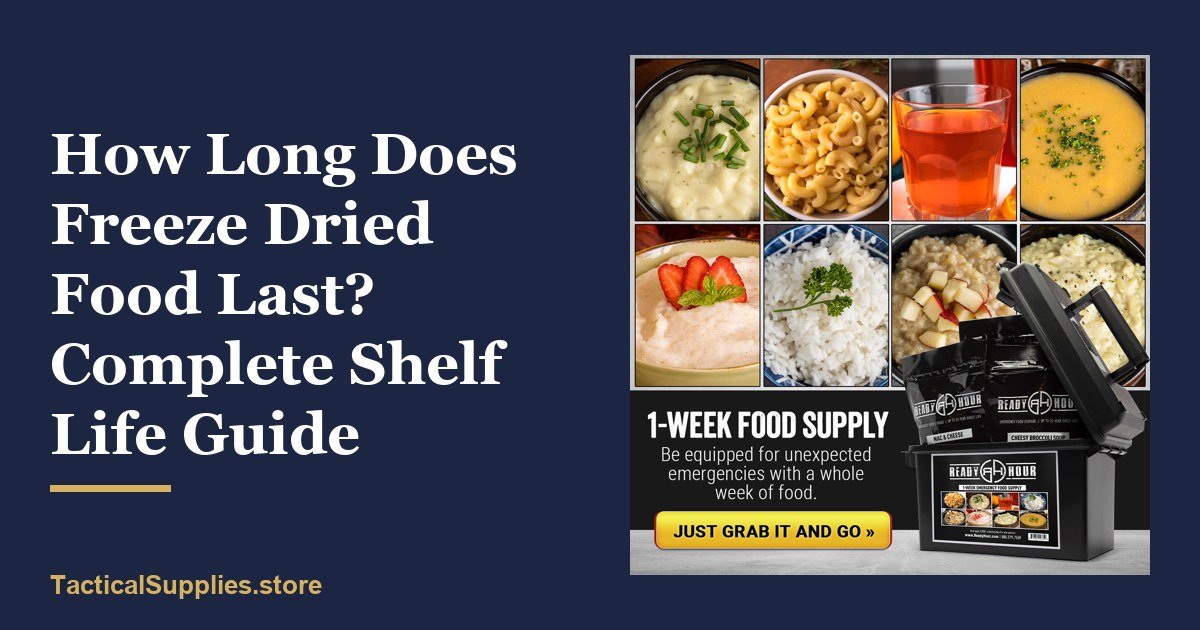
This guide covers realistic freeze dried food shelf life numbers from university extension experts, what shortens them, how to store food for the longest life, and how freeze dried food compares with dehydrated food.
Freeze dried food shelf life at a glance
- Commercial freeze dried food: up to 25 years (University of Minnesota Extension).
- Properly packaged freeze dried food in general: 10 to 15 years, and sometimes up to 25, in airtight, moisture-proof packaging kept cool, dark and dry (Utah State University Extension).
- Home freeze dried food: USU Extension advises not eating it beyond 5 to 10 years after processing, because home products lose nutrients and quality faster than commercial ones.
- Home dehydrated food: 4 months to 1 year (National Center for Home Food Preservation).
Freeze dried food shelf life ranges are wide for a reason. A 25-year label assumes ideal storage. A bucket in a hot garage will not get there.
Why freeze drying lasts so long
Freeze drying works by freezing food quickly at a very low temperature, then pulling the water out as vapor under a vacuum. The ice turns straight into vapor without melting first, a process called sublimation.
According to University of Minnesota Extension, this main drying stage removes up to 90 percent of the water in a food, and a second stage removes another 1 to 2 percent. The finished product has a very low water activity, about 0.3 or below per USU Extension. Without available water, the microbes and chemical reactions that spoil food slow to a crawl.
One important safety note: freeze drying does not kill bacteria. Both extension services say it preserves microbes in a dormant state. Once food takes on moisture again, through rehydration or a damaged package, those microbes can become active. That is why packaging and storage matter so much for freeze dried food shelf life.
Freeze dried vs dehydrated food: which lasts longer?
Both methods remove water, but they do it very differently, and that difference shows up in shelf life.
| Freeze dried | Dehydrated | |
|---|---|---|
| How it works | Frozen, then water removed as vapor under vacuum | Warm, moving air evaporates the water |
| Typical storage life | Commercial: up to 25 years. Home: use within 5 to 10 years | Home dried: 4 months to 1 year |
| Moisture left | Very low (water activity about 0.3 or below) | Fruit about 20%, vegetables about 10% (home drying targets) |
| Texture, flavor, nutrients | Better preserved, per USU Extension | Less well preserved than freeze dried |
| Cost and energy | Higher equipment cost; home units use several times the energy | Low-cost equipment, less energy |
The National Center for Home Food Preservation adds that heat shortens dried food life: most dried fruits keep about 1 year at 60 degrees Fahrenheit but only about 6 months at 80 degrees, and dried vegetables keep about half as long as fruit.
The verdict: freeze dried food shelf life is much longer, and freeze drying keeps more of its original texture and flavor. Dehydrated food is cheaper to make at home and works well for snacks and pantry items you will eat within a year. For a long-term emergency reserve you plan to leave alone for years, freeze dried or commercially packaged long-shelf-life food is the better fit.
What shortens freeze dried food shelf life
- Moisture: freeze dried food absorbs moisture easily, so any leak or poor seal raises water activity and invites spoilage.
- Oxygen: it degrades fats and flavors over time. Oxygen absorbers help.
- Heat: warmer storage speeds up quality loss for any dried food.
- Light: keep food in the dark, and USU warns that windowed bags let more air and moisture through.
- Time itself: USU notes vitamin C in particular can decline significantly within 1 to 3 years, even when the food is still safe.
That last point matters. Safe to eat and full nutrition are not the same thing. Older food may still be safe but carry fewer vitamins, so rotating your supply is smart.
How to store food for the longest freeze dried food shelf life
- Use the right packaging. USU Extension recommends thick Mylar bags (5 to 7 mil) with oxygen absorbers, sealed right after drying. UMN Extension also lists PETE resealable pouches, moisture-barrier vacuum bags and vacuum-sealed jars.
- Keep it cool, dark and dry. A closet or basement with steady temperatures beats a garage or attic.
- Label everything. Note the food, whether it was raw or cooked, and the date.
- Reseal fast after opening. Once a pouch is open, the food starts pulling moisture from the air. Close it tightly and use it soon.
- Rotate. Eat and replace older food on a schedule so nothing sits forgotten.
For container options, see our guide to the best long term food storage containers. If you are new to all of this, start with long term food storage for beginners.
Shelf life of ready-made emergency food kits
If you don’t want to freeze dry or package food yourself, ready-made emergency food kits handle the packaging for you. My Patriot Supply lists a shelf life of up to 25 years when stored properly for its emergency food supplies. Its meals come in resealable, multi-layer pouches with oxygen absorbers, packed in stackable, water-resistant buckets. MPS also notes that unopened pouches keep their shelf life even after a bucket is opened.
- The 4-Week Emergency Food Supply provides 2,000+ calories a day for one person for four weeks (or a family of four for one week), with 16 food and drink varieties and 250 servings.
- The 3-Month Emergency Food Supply covers one person for three months with 846 servings across 22 varieties in six buckets.
- The MEGA 3-Month Emergency Food & Protein Supply raises the daily average to 2,400+ calories with 33 varieties, for people who want extra calories and protein built in.
- The 1-Year Emergency Food Supply covers one person for a year, two people for six months, or a family of four for three months, in 24 buckets.
Keep in mind that these are add-water-and-heat meals. The 3-month kit needs 36.12 gallons of water to prepare everything, so plan your water storage alongside your food. Our guide to 25 year shelf life food compares more long-storage options.
How to tell if stored food has gone bad
Check stored food from time to time, especially anything you packaged yourself. Warning signs include softened or sticky texture in food that should be crisp, clumping, visible moisture in the package, damaged seals, off smells and any mold.
The National Center for Home Food Preservation says dried food with mold should be thrown out. Food that has picked up moisture but shows no mold should be used right away or re-dried and repackaged. When in doubt, throw it out.
How much do you need? Use our free Emergency Food Calculator to see exactly how many calories and gallons of water your family needs, from 72 hours to a full year.
For more on this, see our guide: How Long Will MRE Last? Shelf Life by Temperature, Date Codes and Signs of Spoilage.
Want to go deeper? Read How Long Does Food Last in the Fridge Without Power? What to Keep and What to Toss.
Frequently asked questions
Does freeze dried food expire?
Freeze dried food shelf life is long, but not forever. Quality and nutrients decline over time, and a damaged package can let moisture in. Commercial freeze dried food can last up to 25 years in ideal storage, while USU Extension advises using home freeze dried food within 5 to 10 years.
How long does freeze dried food last after opening?
There is no single number. Once opened, freeze dried food absorbs moisture from the air, so reseal it tightly, keep it cool and dry, and use it soon. Resealable pouches make this easier.
Which lasts longer, freeze dried or dehydrated food?
Freeze dried. Home dehydrated food is typically good for 4 months to 1 year, while commercially freeze dried food can last up to 25 years when stored properly.
Does freeze drying kill bacteria?
No. Freeze drying preserves microbes in a dormant state. Cook meat, poultry, seafood and eggs to safe temperatures, either before freeze drying or after rehydrating.
The bottom line
Freeze dried food shelf life can reach 25 years for commercial products, but only with airtight packaging and cool, dark, dry storage. Home freeze dried food should be eaten within 5 to 10 years, and home dehydrated food within a year. Store it well, label it, rotate it, and count the water you’ll need to prepare it. For how food fits into a full outage plan, see our power outage emergency kit guide.
Sources: University of Minnesota Extension: Freeze-drying, Utah State University Extension: Can I Freeze-Dry That?, National Center for Home Food Preservation: Packaging and Storing Dried Foods. Product details are from My Patriot Supply product pages as of October 27, 2026.