Disclosure: this post contains affiliate links. If you buy through them, we may earn a commission at no extra cost to you.
A 14-day emergency kit list goes beyond the standard 72-hour kit to cover the kind of disruption that lasts weeks, not days. Most official guidance starts at about 3 days of supplies, but the CDC also suggests trying to store a 2-week supply of water if you can. This 14-day emergency kit list shows what your family needs to stay safe and reasonably comfortable for two full weeks at home without outside help.
Quick pick: 14-Day Emergency Kit List
Water: Alexapure Pro Water Filtration System
Gravity-powered, so it makes drinking water with no electricity or plumbing.
Check today’s price
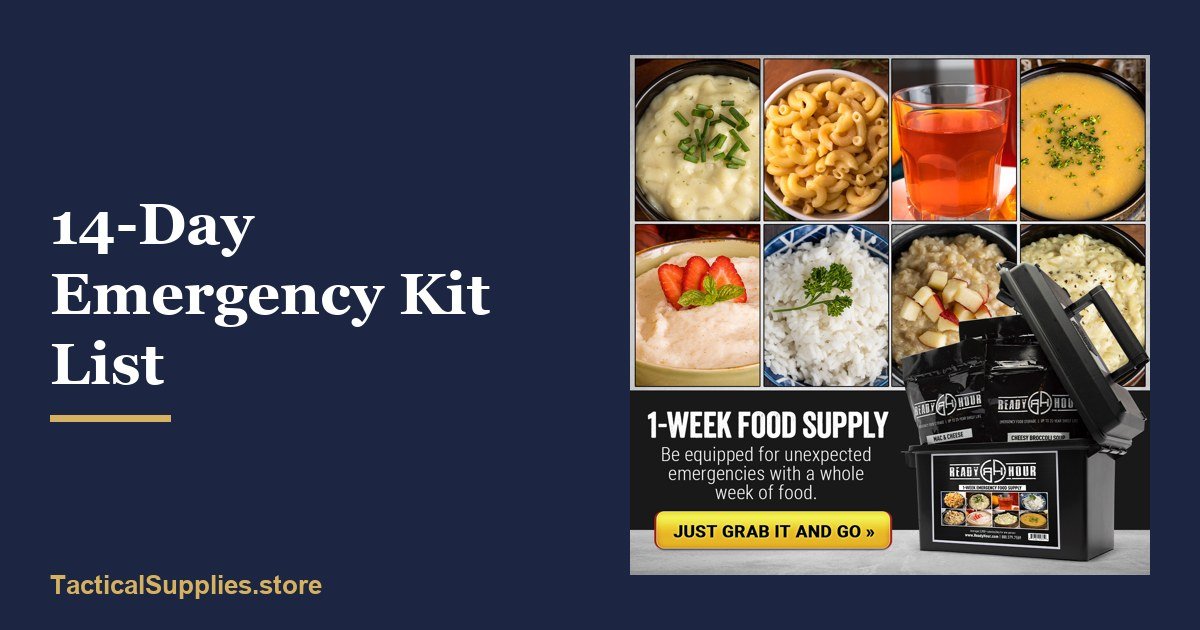
Food: 4-Week Emergency Food Supply
Feeds one person for four weeks or a family of four for one week.
Check today’s price
Power: Grid Doctor 300 Solar Generator
320Wh battery with a 100W solar panel, under 9 pounds. For phones, lights and a CPAP.
Check today’s price
If you haven’t built a basic kit yet, start with our 72 hour kit checklist, then use this guide to stretch it to two weeks.
14-day emergency kit list: the quick answer
Here is the full 14-day emergency kit list for sheltering at home, built from the Ready.gov supply list and scaled to two weeks. Water and food amounts are per person.
- Water: 14 gallons, plus a way to filter more
- Food: 28,000 calories of non-perishable food, plus a manual can opener
- Medical: first aid kit, prescription and over-the-counter medications, spare glasses and contact lens solution
- Sanitation: soap, hand sanitizer, moist towelettes, garbage bags, plastic ties and feminine supplies
- Light and communication: flashlight, extra batteries, battery-powered or hand-crank radio, NOAA Weather Radio, phone chargers and a backup battery
- Tools and shelter: whistle, dust mask, plastic sheeting, scissors, duct tape, wrench or pliers to turn off utilities, local maps, fire extinguisher, and matches in a waterproof container
- Warmth: a sleeping bag or warm blanket for each person, plus a complete change of clothing for your climate and sturdy shoes
- Documents and cash: copies of insurance policies, identification and bank account records, plus cash
- Family extras: infant formula and diapers, pet food and extra water for pets, and activities for children
Why a 14-Day Emergency Kit List?
The American Red Cross recommends exactly this: a 3-day supply of water and food for evacuation, and a 2-week supply for home. Three days is a starting point, not a guarantee. Hurricanes, ice storms, floods and earthquakes can knock out power, water and roads for much longer, and relief takes time to reach everyone. A two-week plan gives you a realistic buffer while staying manageable to store in a normal home.
Planners are thinking longer term too. On September 30, the Pentagon announced its FORTRESS America initiative, and according to Pentagon documents reviewed by Fox News, major U.S. bases are being asked to plan to sustain essential operations for at least 90 days on their own. The Pentagon hasn’t released the full memo, and Snopes rates the reporting “mostly true.” In October, the U.K. government also launched a “Be Ready” campaign urging families to keep emergency food and water at home. Two weeks of supplies is a sensible middle ground for most families.
Water Storage for Two Weeks
Water is the hardest part of any 14-day emergency kit list because of the sheer volume. The CDC recommends at least 1 gallon per person per day, which means:
- 1 person: 14 gallons
- 2 people: 28 gallons
- Family of four: 56 gallons
The CDC also says to store more for pregnant women, people who are sick, pets, or if you live in a hot climate. Keep containers somewhere cool (50°F to 70°F) and out of direct sunlight, and replace water you bottled yourself every 6 months. Our emergency water storage solutions guide covers containers and barrels.
Because 56 gallons is a lot of jugs, pair stored water with a way to make more. The Alexapure Pro Water Filtration System is gravity-powered, so it works without electricity or plumbing. It has 2.5-gallon chambers, and the maker says it has been tested against 220+ contaminants. Remember that many emergency meals need water to prepare, so count that too.
Food for Extended Emergencies
The food section of your 14-day emergency kit list needs a little math. At 2,000 calories per person per day, two weeks is 28,000 calories per person, or 112,000 calories for a family of four. Ready.gov adds a practical point: your refrigerator keeps food cold for only about 4 hours without power, and a full freezer holds its temperature for about 48 hours. After that, you’re eating from the pantry.
Mix everyday shelf-stable food your family already likes with long-shelf-life emergency meals:
- The 4-Week Emergency Food Supply covers 2 people for 2 weeks (or one person for 4 weeks). It has 250 servings across 16 food and drink varieties and needs about 9 gallons of water to prepare.
- For a family of four, the 3-Month Emergency Food Supply is rated to feed four people for 3 weeks, which covers two weeks with room to spare. It has 846 servings across 22 varieties and needs about 36 gallons of water to prepare everything.
Both list a shelf life of up to 25 years when stored properly. Add a manual can opener, and include variety and a few comfort foods to prevent food fatigue over two stressful weeks.
14-day emergency kit list by family size
Here is the core math for two weeks at home, using 1 gallon of water and 2,000 calories per person per day. Add extra water for cooking emergency meals, pets, hot weather, and anyone who is pregnant, nursing or sick.
| Household | Water for 14 days | Food for 14 days |
|---|---|---|
| 1 person | 14 gallons | 28,000 calories |
| 2 people | 28 gallons | 56,000 calories |
| 4 people | 56 gallons | 112,000 calories |
| 6 people | 84 gallons | 168,000 calories |
Have kids, teens or very active adults? Calorie needs vary by age and activity, so treat 2,000 a day as an average.
Medical Supplies for Two Weeks
Your 14-day emergency kit list needs more medical supplies than a basic kit, since pharmacies and clinics may be closed or hard to reach.
- A full comprehensive first aid kit
- An extra supply of prescription medications. The American Red Cross recommends at least a 7-day supply in any kit; for a two-week plan, ask your doctor or pharmacist how to keep more on hand safely.
- Over-the-counter medicines: pain relievers, anti-diarrhea medication, antacids and laxatives, as Ready.gov suggests
- Spare eyeglasses and contact lens solution
- Feminine supplies and any infant or elderly care items
- A basic first aid manual, since professional care may be delayed
If someone in your home relies on an electric medical device, Ready.gov advises talking to your medical provider about a power outage plan.
Sanitation and Hygiene
Two weeks without reliable running water creates real sanitation problems, and poor hygiene spreads illness. Stock up on:
- Moist towelettes, garbage bags and plastic ties (all on Ready.gov’s basic kit list)
- Soap, hand sanitizer and disinfecting wipes
- Toilet paper, toothpaste and personal hygiene items
- Heavy-duty bags and a bucket for an emergency toilet if water service stops
- Paper plates, cups and plastic utensils to save water on dishes
Power and Entertainment
Light and phone power are essential for two weeks. Pack LED flashlights or headlamps for each person, extra batteries, and a battery-powered or hand-crank NOAA Weather Radio. Power banks will keep phones going for a few days.
For longer outages, a solar generator helps. Be realistic about size:
- The Grid Doctor 300 Solar Generator (320Wh battery, 300W output, 100W solar panel) is built for phones, laptops, lights, routers and small medical devices such as CPAP machines. The maker says it is not designed for full-size refrigerators, microwaves or space heaters.
- The Grid Doctor 3300 Solar Generator (2,048Wh battery, 3,300W continuous output, 200W panel included) is the one sized for multi-day outages where refrigeration, lights and communications matter. It weighs about 57 pounds, so it is not a grab-and-go item.
Never run a gas generator, grill or camp stove indoors. Ready.gov says these should always be used outdoors and at least 20 feet from windows, and recommends carbon monoxide detectors with battery backup on every level of your home. For small-room heat in a winter outage, the VESTA Self-Powered Indoor Space Heater & Stove needs no electricity, warms up to about 200 square feet, and should be used with proper ventilation per the maker. Our power outage emergency kit guide covers this in more detail.
Don’t forget morale. Include books, cards, board games and activities for kids that don’t need electricity. Keeping spirits up for two weeks matters more than people expect.
Your 14-day emergency kit list at a glance
- Water: 14 gallons per person, plus a gravity filter
- Food: 28,000 calories per person, plus a manual can opener
- First aid kit, extra medications and glasses
- Sanitation and hygiene supplies, plus an emergency toilet setup
- Flashlights, NOAA radio, batteries and power banks
- Solar generator sized to your needs
- Safe indoor heat and battery-backup CO detectors
- Copies of documents, cash in small bills and warm bedding
- Books, games and activities
- Whistle, dust mask, plastic sheeting, scissors and duct tape
- Wrench or pliers, local maps, fire extinguisher and waterproof matches
For a numbered breakdown of the core items, see what are 20 items in an emergency kit.
One more thing: a two-week kit is built to stay home. If you are ordered to evacuate, you can’t take 56 gallons of water with you, so keep a small grab-and-go bag too. Our bug out bag checklist covers what to pack.
Assemble your kit gradually and store it in a cool, dry place. Ready.gov advises replacing expired items and rethinking your needs every year. Practice using your supplies, like preparing one emergency meal, before you need them for real.
How much do you need? Use our free Emergency Food Calculator to see exactly how many calories and gallons of water your family needs, from 72 hours to a full year.
For more on this, see our guide: Emergency Preparedness.
Frequently asked questions
How much water do I need for 14 days?
At least 14 gallons per person, based on the CDC’s 1 gallon per person per day. A family of four needs 56 gallons, plus extra for pets, hot weather or anyone who is pregnant or sick.
Is a 14-day emergency kit list overkill?
No. The CDC suggests trying to store a 2-week water supply if possible, and major storms can disrupt services for longer than 3 days. Two weeks is a practical, achievable goal for most homes.
Does the Red Cross recommend a 2-week emergency supply?
Yes. The American Red Cross recommends a 2-week supply of water and food for home, and a 3-day supply for evacuation, with water at one gallon per person per day.
How much food is two weeks for a family of four?
About 112,000 calories at 2,000 calories per person per day. That’s roughly 56 days of food for one person, so check each kit’s coverage rather than its bucket count.
Where should I store a two-week kit?
In a cool, dry, easy-to-reach place inside your home, such as a closet, basement or under beds. Split it across a few spots if space is tight.
What should be on a 14-day emergency kit list?
Water (14 gallons per person), food (28,000 calories per person), a first aid kit and medications, sanitation supplies, flashlights, a radio, extra batteries, phone chargers, basic tools, warm bedding, clothing, copies of important documents and cash.
What is the difference between a 72-hour kit and a 14-day kit?
A 72-hour kit covers 3 days and is small enough to carry if you evacuate: 3 gallons of water and 6,000 calories per person. A 14-day kit stays at home and takes 14 gallons and 28,000 calories per person, plus more medicine, sanitation supplies and power.
Can I build a 14-day emergency kit a little at a time?
Yes. Start with water, then add food, medicine and sanitation, then power and heat. A few months is a realistic timeline for most families.
The bottom line
A 14-day emergency kit list is the step from “we’ll get by” to “we’re covered.” Focus on water first, then food, medicine, sanitation, power and safe heat. Build it over a few months, store it well, and check it once a year.
Sources: CDC: How to Create an Emergency Water Supply, Ready.gov: Build a Kit, Ready.gov: Power Outages, American Red Cross: Survival Kit Supplies, Fox News, Snopes, Fortune. Product details are from My Patriot Supply product pages as of October 27, 2026.