Disclosure: this post contains affiliate links. If you buy through them, we may earn a commission at no extra cost to you.
The best bug out bag is the one you can actually lift, carry and reach in under a minute. Most families don’t need a military rucksack or a pack with 200 pieces of gear. They need a sensible bag, packed for their own household, that sits by the door until the day an evacuation order comes.
Quick pick: Best Bug Out Bag
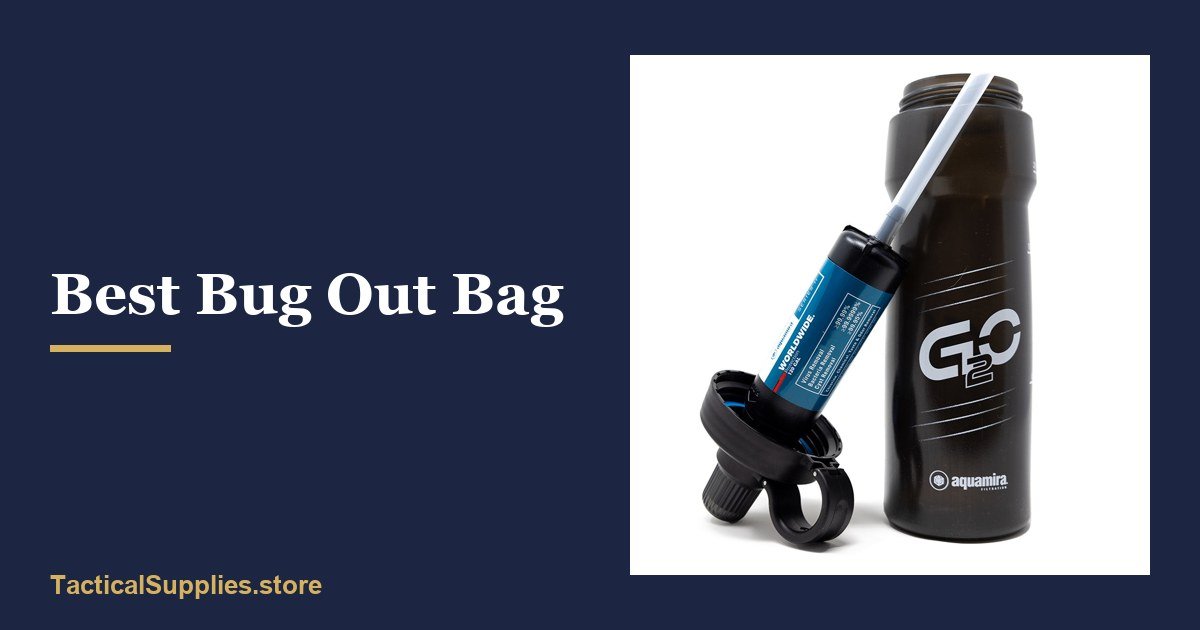
Water: Alexapure Pro Water Filtration System
Gravity-powered, so it makes drinking water with no electricity or plumbing.
Check today’s price
Food: 1-Week Food Supply Ammo Can
2,000+ calories a day for one person for a week, shelf life of up to 25 years.
Check today’s price
Power: Grid Doctor 300 Solar Generator
320Wh battery with a 100W solar panel, under 9 pounds. For phones, lights and a CPAP.
Check today’s price
This guide shows you how to choose one. We don’t rank brands here, because the right pack depends on your body, your family and how you would actually leave. Instead, you’ll get the 7 features that matter, what to skip, and how to decide between a ready-made kit and building your own.
What “bug out bag” really means for a normal family
A bug out bag is a go-bag: a packed bag you can grab when you have to leave home fast. Ready.gov tells families to pack a go-bag in advance and make sure everyone knows where it is and who is responsible for it. Wildfires, floods, hurricanes and chemical spills are the likely reasons, not the end of the world.
Many families will leave by car, so plan for that first. Ready.gov also warns that, depending on the disaster, you may need to leave on foot. That is why your bag should be carryable, even if it spends the whole trip on the back seat.
How to choose the best bug out bag: 7 features that matter
1. A weight you can really carry
Weight matters more than any brand name when you’re picking the best bug out bag. REI’s common rule of thumb is that a loaded backpacking pack should weigh about 20 percent of your body weight, and a day pack about 10 percent. REI also says the rule doesn’t fit everyone. Load your bag, then walk around the block with it. If that hurts, take things out.
2. A size that fits your body
Torso length matters as much as capacity. A pack that fits well puts the weight on your hips, not your shoulders. Try it on loaded, and buy the smallest size that holds your gear, because extra space tends to get filled.
3. A real hip belt and padded straps
Thin straps are fine for a school bag and miserable with 20 pounds in it. A padded hip belt and sternum strap make the biggest difference on any walk longer than a few minutes.
4. Tough material and good zippers
Your bag will sit for years, then get used hard. Look at the stitching at the strap anchors and the zipper quality. Those are the first things to fail. Keep things dry with a rain cover or a simple waterproof liner inside.
5. Easy access
You want to reach water, a flashlight and your first aid kit without unpacking everything. Front panel or side pockets beat one deep sack.
6. A low-key look
Plain colors usually make more sense than heavy camouflage for a family leaving town. You want a bag that looks like normal travel gear at a shelter or a relative’s house.
7. Room for your family’s real needs
Medications, baby formula, glasses, pet food and phone chargers are what you will miss most, so the best bug out bag for your family has room for them. Pack those first, then add the survival extras.
Ready-made kit or build your own?
Ready-made kits are fast, and fast counts for something if you would otherwise never get around to it. The catch is that some include filler, and none of them know your prescriptions. Building your own takes longer but costs you nothing in wasted weight.
Our advice: the best bug out bag usually starts as a good empty pack that you fill from a list. Our free bug out bag checklist with 50 items has a printable PDF, and the 72-hour kit checklist covers the same ground for the household. If you buy a ready-made kit, open it, check every item and swap out the junk.
What goes inside the best bug out bag
Start with the basics from the Ready.gov supply list, then trim for weight:
- Water and a way to treat more
- Non-perishable food
- A battery or hand-crank radio
- A flashlight and extra batteries
- A first aid kit
- A whistle and a dust mask
- A phone charger and backup battery
- Local paper maps
- Copies of insurance papers, ID and bank records in a waterproof container
- Prescription medicines, sturdy shoes, long pants and a hat
For medical gear, see our guide to the best first aid kit for survival.
Water: the heaviest item
Ready.gov recommends one gallon per person per day for drinking and sanitation. USGS puts a gallon at about 8.34 pounds, so three days for one person is 25 pounds of water alone. Nobody wants that on their back. Carry what you can, and keep the rest in the car.
At your destination, a filter does the heavy lifting. The Alexapure Pro Water Filtration System is gravity-powered and needs no electricity or plumbing, but its 2.5-gallon chambers make it a car or home item, not a backpack item. Our guide to the best water filters for emergencies covers more options.
Food: split it between bag and car
The 1-Week Food Supply Ammo Can works well as a car kit. It provides 14,860 calories (2,000+ per day for one person for a week, or two people for 72 hours), has a shelf life of up to 25 years when stored properly, and comes in a 14″ x 7″ x 8.5″ can.
That can is too bulky for most packs, so here is the practical trick. The food comes in resealable pouches, so you can move a few into your bag and leave the can in the trunk. Keep in mind that the meals need water and heat, about 2.96 gallons to prepare the whole supply. Add a few no-cook snacks for the road.
Power and heat: car items, not pack items
A power bank covers phones in a backpack. If you are driving somewhere that may have no power for a while, the Grid Doctor 300 Solar Generator charges phones, laptops and small devices, with a 320Wh battery and a 100W solar panel. Together they weigh about 18 pounds (8.625 pounds for the generator, 9.8 for the panel), so it belongs in the car. The power outage emergency kit guide explains when it makes sense.
For cold-weather evacuations to a cabin or relative’s house without power, the VESTA Self-Powered Indoor Space Heater & Stove weighs 7.6 pounds, warms spaces up to about 200 square feet and doubles as a stove. The maker says to use it with proper ventilation.
Common mistakes to skip
- Packing too much. A bag you can’t carry is a suitcase you’ll leave behind.
- Buying gear you’ve never used. Open everything and learn how it works at home.
- Forgetting the kids and pets. Ready.gov notes most public shelters allow only service animals, so find a pet-friendly place ahead of time.
- Letting the bag go stale. Check medicines, batteries and clothing sizes twice a year.
- Running on empty. Ready.gov advises keeping at least half a tank of gas at all times, because stations may close or lose power.
Related reading: Best Gifts for Preppers 2026.
Frequently asked questions
What is the best bug out bag for a beginner?
A comfortable, plain hiking backpack you can carry for a mile. Fill it from a checklist, add your medicines, and upgrade later if you find a real weak spot.
How heavy should a bug out bag be?
A common rule of thumb is no more than about 20 percent of your body weight. For a 150-pound adult, that is 30 pounds. Lighter is better, and children and older adults should carry much less.
How many days should it cover?
Three days is the common target, and Ready.gov advises several days of food and water. That amount is hard to carry on foot, so keep extra water and food in the car.
Does every family member need a bag?
Each adult should have one. Older kids can carry a small pack with clothes, a snack and a flashlight. Make sure everyone knows where the bags are.
The bottom line
The best bug out bag is simple: a pack that fits, a weight you can carry, and supplies chosen for your actual family. Pick the bag first, pack it from a list, walk with it once, then store it where everyone can find it. That beats any expensive pack sitting empty in a closet.
Sources: Ready.gov Evacuation, Ready.gov Build a Kit, REI, USGS. Product details are from My Patriot Supply product pages as of October 27, 2026.