Disclosure: this post contains affiliate links. If you buy through them, we may earn a commission at no extra cost to you.
Knowing how to prepare for a winter storm is mostly about timing. The work you do in the fall, the steps you take when a watch is issued, and the choices you make once the snow and ice arrive all matter. This guide walks you through each stage, before, during and after, so nothing gets missed.
Quick pick: How to Prepare for a Winter Storm
Heat and cooking: VESTA Indoor Heater & Stove
No electricity needed and doubles as a stove. Use it with ventilation.
Check today’s price
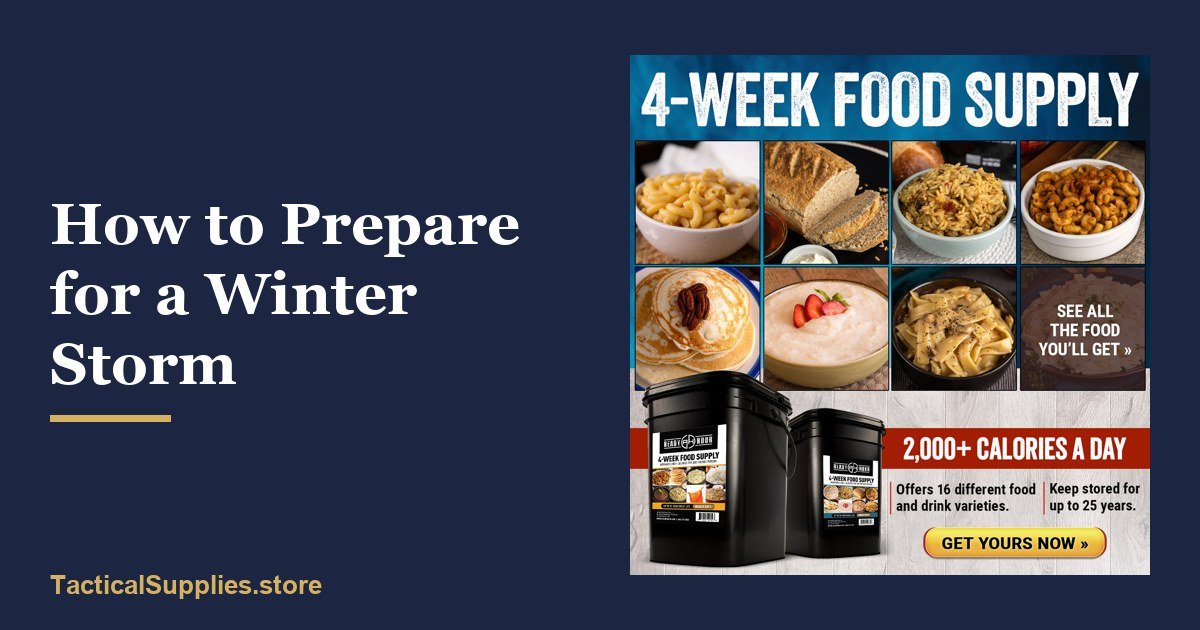
Food: 4-Week Emergency Food Supply
Feeds one person for four weeks or a family of four for one week.
Check today’s price
Power: Grid Doctor 300 Solar Generator
320Wh battery with a 100W solar panel, under 9 pounds. For phones, lights and a CPAP.
Check today’s price
If you’re looking for the supply list itself, we cover that in detail in our winter storm emergency kit guide. This post is the action plan that goes with it.
Understand the alerts first
Part of learning how to prepare for a winter storm is knowing what the forecasts mean. The National Weather Service uses a few terms you should know, because each one is a signal to move to the next step.
- Winter Storm Watch: conditions are favorable for a significant storm. Ready.gov says watches are usually issued 12 to 48 hours ahead.
- Winter Storm Warning: a significant storm with snow, ice, sleet or blowing snow is expected. Warnings usually come 12 to 24 hours ahead.
- Ice Storm Warning: usually issued for ice accumulation of around 1/4 inch or more.
- Blizzard Warning: frequent gusts of 35 mph or more with snow cutting visibility below a quarter mile for three hours or more.
Sign up for your community’s alert system and keep a battery-powered NOAA Weather Radio, so you still get updates if the power and internet go down.
How to prepare for a winter storm: before the season (fall)
The best time to prepare is before the first forecast. These jobs take an afternoon or two and pay off all winter.
Step 1: Winterize the house
When you think about how to prepare for a winter storm, start with the house itself.
- Insulate, caulk and weatherstrip doors and windows (Ready.gov, CDC).
- Insulate water lines that run along exterior walls so they’re less likely to freeze (CDC).
- Cut away tree branches that could fall on your home during a storm (CDC).
- Have your furnace and vents checked by a qualified technician each winter, and your chimney inspected if you use a fireplace or wood stove (CDC).
Step 2: Install and test your alarms
Install smoke alarms and carbon monoxide (CO) detectors with battery backup, and test them. The CDC recommends testing monthly and replacing batteries twice a year. Make sure the outside vent for your CO detector or furnace is clear of leaves; the NWS adds that it must be cleared of snow during and after a storm.
Step 3: Build your supplies
Supplies are the part of how to prepare for a winter storm that most people think of first.
Ready.gov says to gather supplies for several days without power, including medicine and pet needs. That means food that needs no refrigeration, water, light, a radio, first aid supplies and a safe backup heat source. For a household, a long-shelf-life option like the 4-Week Emergency Food Supply covers a family of four for one week (or one person for four weeks) and stores for up to 25 years when kept properly. Just remember most of the meals need hot water, about 9 gallons to prepare the full supply.
Step 4: Plan your heat
Decide now how you’ll keep one room warm if the power goes out. Never plan on using a gas stovetop or oven; Ready.gov says not to heat your home with either. A non-electric option like the VESTA Self-Powered Indoor Space Heater & Stove can warm a space up to about 200 square feet and doubles as a stove, with the maker’s guidance to use it with adequate ventilation. If you heat with oil or propane, the NWS says to refuel before you’re empty, since fuel carriers may not reach you for days after a storm.
Step 5: Prepare the car
Keep the gas tank near full to avoid ice in the tank and fuel lines (NWS, CDC), and stock a car kit with blankets, a shovel, a scraper, sand or cat litter, jumper cables, water and snacks.
When a watch or warning is issued: your 48-hour winter storm checklist
If you only have a day or two, this is how to prepare for a winter storm fast. Work through the list in order.
- Top off supplies. Pick up any prescriptions, baby items and pet food you’re low on.
- Fill water containers. Ready.gov recommends one gallon per person per day for several days. Fill extra jugs in case pipes freeze.
- Charge everything. Phones, power banks, laptops and any backup battery. A small unit like the Grid Doctor 300 Solar Generator (320Wh battery, 300W output, 100W solar panel included) can keep phones, lights or a CPAP machine running; it is not built for a fridge or space heater.
- Fill the gas tank and park where plows can get by.
- Protect your pipes. The Red Cross suggests opening cabinet doors under sinks so warm air reaches the plumbing, and letting cold water drip from faucets served by exposed pipes.
- Bring pets inside and move outdoor furniture or anything the wind can throw.
- Pick your warm room. Choose one interior room, stage blankets, sleeping bags and flashlights there.
- Check on neighbors, especially older adults who live alone.
During the storm: how to prepare for a winter storm power outage
Stay off the roads
Ready.gov says to stay off the roads if you can. If you get stuck in your car, stay inside it. The NWS warns that you can become disoriented quickly in wind-driven snow.
If the power goes out
- Close off unneeded rooms and stuff towels in the cracks under doors (CDC).
- Close curtains, and cover windows with blankets at night (CDC).
- Dress in several layers of loose-fitting clothing, plus hats and mittens.
- Keep the fridge and freezer closed. A fridge keeps food cold for about 4 hours; a full freezer holds for about 48 hours (Ready.gov).
- Unplug appliances and electronics to avoid damage from power surges (Ready.gov).
- Run any generator outdoors only, at least 20 feet from windows, doors and attached garages.
Our guide on how to prepare for a power outage goes deeper on this part, and the power outage emergency kit covers the gear.
Watch for cold injuries
Ready.gov lists the warning signs. Frostbite shows up as numbness and white or grayish-yellow, firm or waxy skin. Hypothermia shows up as shivering, exhaustion, confusion, fumbling hands, slurred speech or drowsiness. A body temperature below 95 degrees is an emergency; get medical help.
Eat and drink well
The CDC recommends well-balanced meals and warm, sweet drinks or broth, and suggests avoiding alcohol and caffeine. If your stove is electric, see our guide to emergency cooking without power.
After the storm
Knowing how to prepare for a winter storm also means planning for the cleanup, which comes with its own risks.
- Shovel slowly. Ready.gov warns that overexertion while shoveling raises the risk of a heart attack. The CDC says anyone with heart disease or high blood pressure should follow their doctor’s advice about shoveling.
- Clear vents. Make sure snow isn’t blocking your furnace or CO detector vents (NWS).
- Stay away from downed power lines. Treat every downed line as live and report it to the utility.
- Check your food. Ready.gov says to throw out food that has been at 40 degrees or higher for two hours or more. When in doubt, throw it out.
- Thaw frozen pipes safely. The Red Cross says never to use an open flame or torch; a hair dryer is a safer choice.
- Restock. Replace what you used, recharge batteries and refill water jugs before the next storm.
How much do you need? Use our free Emergency Food Calculator to see exactly how many calories and gallons of water your family needs, from 72 hours to a full year.
Frequently asked questions
How far in advance should I start to prepare for a winter storm?
The smartest way to prepare for a winter storm is to do the big jobs in the fall. Then use the watch period (usually 12 to 48 hours out) for the final checklist: water, charging, gas and pipes.
What should be on a winter storm checklist?
Supplies for several days, safe heat with a CO detector, charged phones and batteries, a full gas tank, protected pipes, and a plan for one warm room. Our winter storm emergency kit post has the full packing list.
Should I leave the heat on if I’m away during a winter storm?
Yes. The Red Cross advises keeping the heat on and set no lower than 55°F if you’ll be away during cold weather, to help keep pipes from freezing.
Is using the oven for heat part of how to prepare for a winter storm?
No. Ready.gov says never to use a gas stovetop or oven to heat your home because of the carbon monoxide risk. Plan a safe heat source instead when you prepare for a winter storm.
The bottom line
How to prepare for a winter storm comes down to three phases: get the house and supplies ready in the fall, run your checklist when the watch is issued, and stay safe and patient until the roads and power come back. Do it once and it becomes a routine you can repeat every winter.
Sources: Ready.gov: Winter Weather, Ready.gov: Power Outages, Ready.gov: Build a Kit, NWS: Winter Watches and Warnings, NWS: Before a Winter Storm, NWS: During a Winter Storm, CDC: Winter Weather Safety, CDC: During and After a Winter Storm, Red Cross: Frozen Pipes, OSHA: Winter Weather Hazards. Product details are from My Patriot Supply product pages as of October 27, 2026.