Disclosure: this post contains affiliate links. If you buy through them, we may earn a commission at no extra cost to you.
A 72 hour kit checklist helps you pack everything your family needs to get through the first three days of an emergency, whether you have to leave home in a hurry or stay put without power. Working from a written list keeps you from forgetting the small things that matter most when you’re stressed, like a can opener, spare glasses or a phone charger.
Quick pick: 72 Hour Kit Checklist
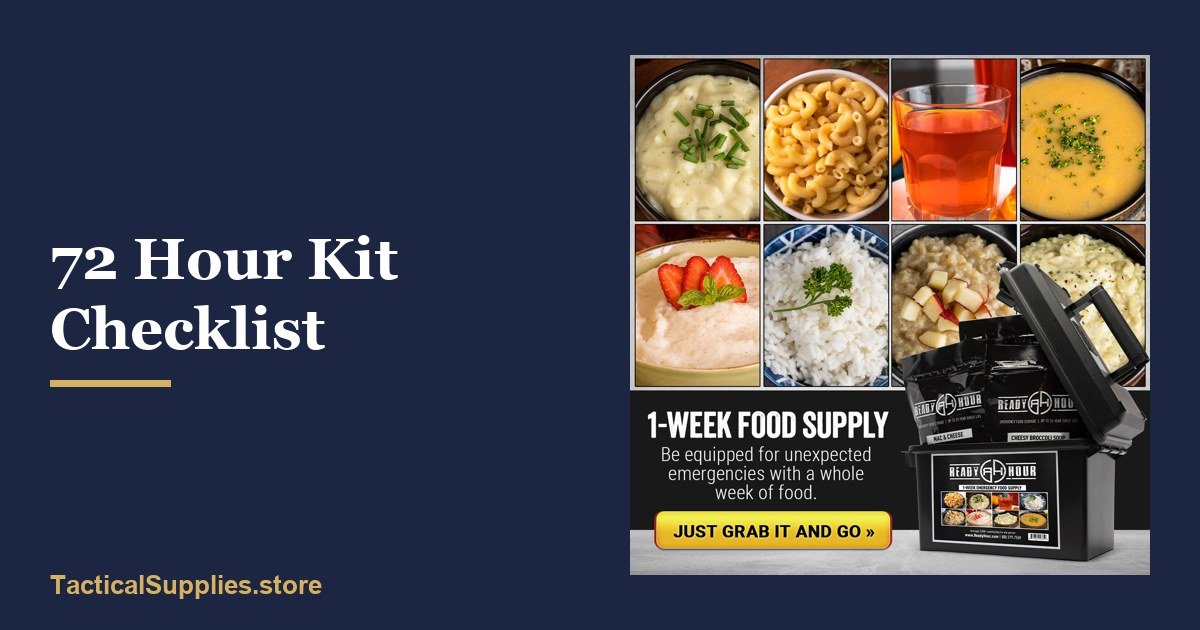
Food: 1-Week Food Supply Ammo Can
2,000+ calories a day for one person for a week, shelf life of up to 25 years.
Check today’s price
Water: Alexapure Pro Water Filtration System
Gravity-powered, so it makes drinking water with no electricity or plumbing.
Check today’s price
Power: Grid Doctor 300 Solar Generator
320Wh battery with a 100W solar panel, under 9 pounds. For phones, lights and a CPAP.
Check today’s price
Below is a complete, category-by-category checklist based on Ready.gov and American Red Cross guidance, plus tips on packing, water and food amounts, and keeping your kit fresh.
Why a 72 hour kit?
The American Red Cross recommends a 3-day supply of food and water for evacuation and a 2-week supply for home. Ready.gov recommends at least several days of food and water and suggests keeping kits at home, at work and in the car. Three days is the standard size for a grab-and-go kit because it covers most short evacuations and is still light enough to carry.
Think of your 72 hour kit checklist as the first layer of your plan. Once it’s done, you can build a bigger home supply. Our 14-day emergency kit list covers that next step.
The complete 72 hour kit checklist
Pack these items in a sturdy backpack or a pair of easy-to-carry bins. Check them off as you go.
Water and food
- Water: 1 gallon per person per day, so 3 gallons per person
- 3 days of non-perishable food per person
- Manual can opener and eating utensils
- Water treatment, such as unscented household bleach or a filter
Light, power and communication
- Flashlight or headlamp for each person
- Battery-powered or hand-crank radio (NOAA Weather Radio if possible)
- Extra batteries
- Cell phone charger and a backup battery or power bank
- Whistle to signal for help
First aid and medicine
- First aid kit
- Prescription medications (the Red Cross recommends a 7-day supply)
- Pain relievers and other non-prescription medicines
- Spare eyeglasses, contact lens solution and hearing aid batteries
- List of medications, allergies and doctors
Tools and safety
- Multi-purpose tool, plus a wrench or pliers to turn off utilities
- Duct tape, scissors and plastic sheeting
- Dust masks or N95 masks
- Matches in a waterproof container
- Work gloves
- Local maps
Clothing and shelter
- A complete change of clothes for your climate and sturdy shoes
- Emergency blanket, plus a sleeping bag or warm blanket per person
- Rain gear and a hat
Hygiene and sanitation
- Soap, hand sanitizer and disinfecting wipes
- Moist towelettes, garbage bags and plastic ties
- Toothbrushes, feminine supplies and personal hygiene items
Documents and money
- Copies of IDs, insurance policies, proof of address and birth certificates in a waterproof bag
- Family and emergency contact list on paper
- Cash in small bills
- Extra set of car and house keys
Family extras
- Baby supplies: formula, bottles, diapers and wipes
- Pet food, water, leash, carrier and ID
- Books, games or a small toy for each child
Water and food on your 72 hour kit checklist
Water is the heaviest item on any 72 hour kit checklist. At 1 gallon per person per day, a family of four needs 12 gallons for three days. Ready.gov notes that children, nursing mothers and sick people may need more, and in very hot weather water needs can double. If you fill your own containers, replace that water every six months.
For food, Ready.gov suggests ready-to-eat canned meats, fruits and vegetables, protein or fruit bars, dry cereal, peanut butter and dried fruit. These need no cooking, which is ideal if you evacuate.
If you’d rather have food already portioned and packed, the My Patriot Supply 1-Week Food Supply Ammo Can provides 14,860 calories, enough for one person for a week or two people for 72 hours. It holds 58 servings across 8 food and drink varieties in a 14″ x 7″ x 8.5″ ammo can, and the maker lists a shelf life of up to 25 years when stored properly. One honest note: these are add-water-and-heat meals, so you’ll need about 3 gallons of extra water to prepare the whole can and a safe way to heat it. Pair it with some no-cook snacks for the road.
One kit per person or one family kit?
Most families do best with a mix. Give each adult and older child a small backpack with their own clothes, flashlight, water bottle, snacks, medicine and a copy of the contact list. Then keep the heavy shared items, like the bulk of the water, food and first aid kit, in one or two family bins near the door or in the car.
Keep each pack light enough for that person to carry. A kit that’s too heavy to lift is a kit that stays behind. For a more mobile, evacuation-focused setup, see our complete bug out bag list.
If you shelter at home instead
Many emergencies, like ice storms and long power outages, keep you at home rather than on the road. Your 72 hour kit still works, but a few home-only items make those days much easier. Our power outage emergency kit guide covers this in depth.
- Clean water without electricity: the Alexapure Pro Water Filtration System is a gravity filter with 2.5-gallon chambers that works without power or plumbing. Its maker says it has been tested against 220+ contaminants.
- Phone and light power: the Grid Doctor 300 Solar Generator has a 320Wh battery, 300W output and a 100W solar panel. It weighs under 9 pounds, but it is meant for phones, lights and small devices like a CPAP, not a fridge.
- Safe heat and cooking for one room: the VESTA Self-Powered Indoor Space Heater & Stove warms spaces up to about 200 square feet, needs no electricity, and doubles as a stove. The maker says to use it with proper ventilation.
Safety reminder from Ready.gov: never use a gas stove or oven to heat your home, and use generators, camp stoves and charcoal grills only outdoors, at least 20 feet from windows. Keep a battery-backup carbon monoxide detector on every level of your home.
How to keep your 72 hour kit checklist up to date
A kit you packed three years ago may have expired medicine and clothes that no longer fit. Ready.gov recommends replacing expired items and rethinking your needs every year. A simple routine:
- Tape a printed copy of your 72 hour kit checklist inside the bag or bin.
- Every six months, swap out water you bottled yourself and check food and medicine dates.
- Each fall and spring, update clothing for the season and for growing kids.
- Test flashlights and radios, and recharge power banks.
- Make sure everyone in the house knows where the kit is.
Ready.gov also suggests a kit in your car and supplies at work, where you should be prepared to shelter for at least 24 hours. A smaller version of this list works for both. For another take on the essentials, see our 72 hour emergency kit checklist article.
How much do you need? Use our free Emergency Food Calculator to see exactly how many calories and gallons of water your family needs, from 72 hours to a full year.
For more on this, see our guide: Free Government Survival Kits.
Related reading: Hurricane Preparedness Supplies.
Frequently asked questions
What is the most important item on a 72 hour kit checklist?
Water. Plan on 1 gallon per person per day, so 3 gallons each for three days, plus a way to treat more. Food, light, medicine and a radio come next.
How much food do I need for a 72 hour kit?
Three days of non-perishable food per person. Choose foods your family already eats and that need little or no cooking, and remember any special dietary needs.
Where should I keep my 72 hour kit?
Somewhere cool, dry and easy to grab on your way out, like a hall closet near the door. Ready.gov also recommends smaller kits for work and your car.
How often should I update my kit?
Check it at least once a year, as Ready.gov recommends, and replace water you bottled yourself every six months. Twice a year, when the clocks change, is an easy habit to remember.
The bottom line
A 72 hour kit checklist turns a vague worry into a box you can check off. Gather water, food, light, a radio, first aid, documents and cash, pack it where you can grab it, and review it twice a year. Once those three days are covered, you can build toward two weeks at home.
Sources: Ready.gov: Build a Kit, Ready.gov: Water, Ready.gov: Food, Ready.gov: Power Outages, American Red Cross: Survival Kit Supplies. Product details are from My Patriot Supply product pages as of October 27, 2026.