Disclosure: this post contains affiliate links. If you buy through them, we may earn a commission at no extra cost to you.
Non-GMO seeds are everywhere on garden store shelves, but the label tells home gardeners less than most people think. Very few vegetable seeds sold to home gardeners are genetically engineered in the first place, so “non-GMO” usually isn’t what separates a good packet from a bad one. Here’s what the term really means, how it compares to organic, heirloom and hybrid, and what to look for instead when you buy.
Quick pick: non-GMO seeds you can also save and replant
Use: MEGA Seed Bank for Survival
55 heirloom, open-pollinated, non-GMO varieties in resealable packets inside a large seed storage vault.
Check today’s price
Use: Fall/Winter Variety Pack
15 heirloom, non-GMO varieties selected for planting during the colder months.
Check today’s price
What “GMO” actually means
The FDA uses “GMO” as the common term for foods made through genetic engineering. In plain terms, scientists identify the genetic information behind a trait, copy it, and insert it into the DNA of another organism. The FDA notes that genetic engineering was developed in the 1970s.
That’s very different from the traditional plant breeding gardeners have relied on for centuries. The FDA points out that people have used selective breeding and cross-breeding for thousands of years, and most foods today come from those methods. Hybrid tomatoes, heirloom beans and your grandmother’s saved squash seed all come from traditional breeding, not genetic engineering.
How many garden seeds are really GMO?
Fewer than the labels suggest. The FDA says “only a few types of GMO crops are grown in the United States,” and the big ones are farm crops: soybeans, corn, sugar beets, canola and cotton. The FDA adds that most GMO crops grown in the U.S. are used for animal food, and most GMO plants are used to make ingredients for other food products.
A handful of fresh produce items do come in GMO varieties, including some potatoes, summer squash, apples, papayas and pink pineapples. Even there, the FDA notes that GMO summer squash “is not widely grown.”
The bigger point for gardeners comes from Oregon State University Extension: most vegetable seed available to home gardeners is hybrid, “which is not the same as GMO.” So when a packet of lettuce or carrot seed says non-GMO, it’s usually describing what nearly all lettuce and carrot seed already is.
Non-GMO seeds vs organic vs heirloom vs hybrid
These four labels answer different questions, and one packet can carry several of them.
- Non-GMO: the variety wasn’t made with genetic engineering. It says nothing about how the seed was grown, how fresh it is, or whether you can save seed from it.
- Organic: about how the seed was produced. The USDA says genetic engineering is prohibited in organic products and an organic farmer can’t plant GMO seeds. If it has the USDA Organic label, it wasn’t produced with GMOs. The USDA also notes there are no specific GMO tolerance levels in the organic rules, so trace amounts don’t automatically mean a violation.
- Heirloom: about history. University of Wisconsin Extension describes heirlooms as old, open-pollinated varieties passed down from generation to generation.
- Hybrid: about breeding. Hybrids come from crossing specific parent plants. University of Illinois Extension says their offspring won’t necessarily carry the same traits, so they aren’t suggested for seed saving.
Put simply, all heirloom and most hybrid garden seeds are non-GMO seeds. The label that changes what you can do next year is open-pollinated, not non-GMO. For a deeper look at the heirloom side, see our guide to heirloom vegetable seeds.
How to choose non-GMO seeds that actually grow
Since nearly every packet qualifies, judge seeds on the things that affect your harvest.
- Decide if you want to save seed. If yes, buy open-pollinated or heirloom. Oregon State calls open-pollinated seed the best choice for seed savers. If you just want a big harvest this year, a hybrid is fine.
- Match your zone and season. Check days to maturity against your frost dates. Cool-season crops like spinach, lettuce and peas are the ones to plant in fall in many areas.
- Know the seed’s lifespan. Virginia Cooperative Extension lists average storage life by crop: lettuce about 6 years, cucumbers 5, tomatoes and squash 4, beans and peas 3, peppers and sweet corn 2, and onions just 1.
- Test before you trust. Virginia Extension’s method is to sprout a few seeds between moist paper towels. If germination is low, discard the seed or plant extra.
- Store it right. University of Nebraska-Lincoln Extension recommends an airtight container with a desiccant like silica gel, ideally around 35°F. Skip the garage and laundry room.
Our survival food seeds guide goes further on which crops to stock and how to store seed for the long haul.
Where to buy non-GMO seeds
SeedsNOW labels its collections heirloom and non-GMO, and sells single packets, variety packs and seed banks. A few examples from its catalog:
- The Blue Lake bush bean is a non-GMO heirloom with stringless 5 to 6 inch pods on compact plants, maturing in about 50 to 60 days. Beans are also among the easiest crops for saving your own seed.
- The Cucumber Garden Variety Pack includes 12 heirloom, non-GMO cucumber varieties, individually packaged. If you plan to save cucumber seed, Wisconsin Extension says cucurbits must be isolated from others in their family.
One honest note: SeedsNOW’s Trustpilot rating is mixed, at 3.0 out of 5 from about 83 reviews, and the top complaint is seed that didn’t sprout. That’s exactly why the paper towel test above is worth ten minutes. Run it when the seed arrives, not the week you plan to plant.
Seeds take a season, stored food doesn’t
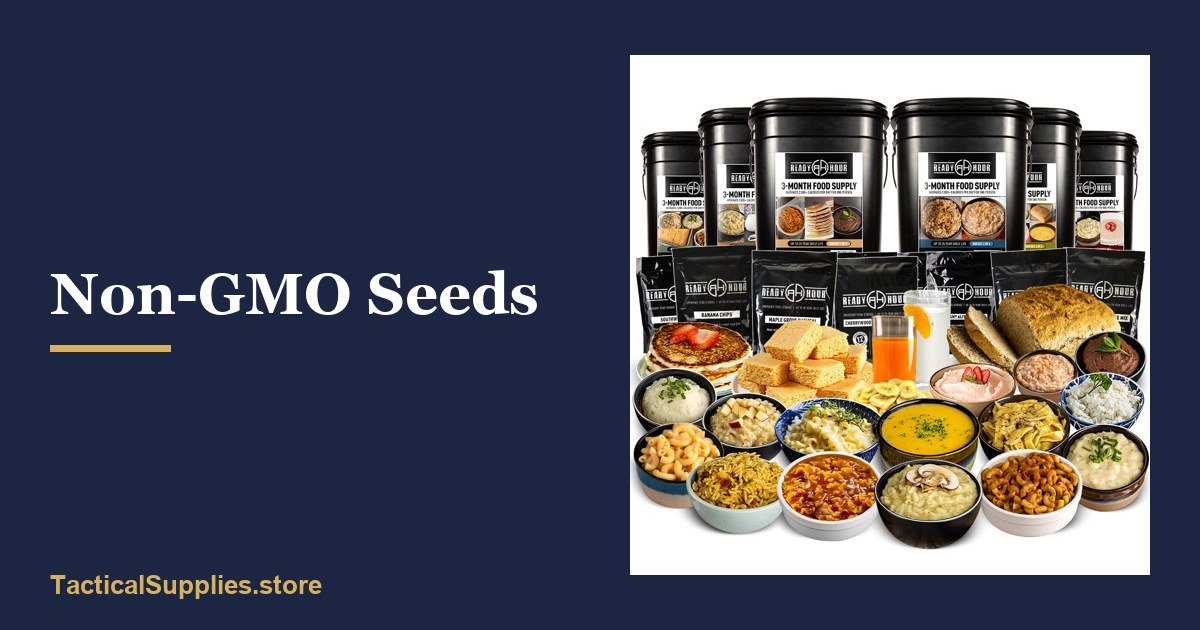
Non-GMO seeds are a great long-term investment, but a garden needs months, decent weather and some luck before it feeds a family. Stored food covers that gap. The 3-Month Emergency Food Supply from My Patriot Supply feeds one person for three months, two people for six weeks, or a family of four for three weeks, with a shelf life of up to 25 years when stored properly. It needs water to prepare, so count that in your plan. For the step-by-step version, see how to build a 3-month emergency food supply.
Frequently asked questions
Are most garden seeds GMO?
No. The FDA says only a few types of GMO crops are grown in the U.S., mostly farm crops like corn and soybeans. Oregon State Extension notes that most home-garden vegetable seed is hybrid, and hybrid is not the same as GMO.
Is hybrid the same as GMO?
No. Hybrids come from crossing two parent plants through traditional breeding. GMOs are made by inserting genetic information into an organism’s DNA through genetic engineering.
Are organic seeds non-GMO?
Yes. The USDA prohibits genetic engineering in organic production, so seed with the USDA Organic label wasn’t produced with GMOs.
Can I save seeds from non-GMO plants?
Only if they’re also open-pollinated. Seed saved from a non-GMO hybrid won’t reliably grow true to the parent, so look for open-pollinated or heirloom on the packet.
The bottom line
Non-GMO seeds are the norm for home gardeners, not a special category. Don’t let that label alone drive your choice. Choose open-pollinated or heirloom if you want to save seed, match varieties to your zone, test germination, and store seed cold and dry. Then keep a food supply on hand while the garden grows. Just getting started? Our long-term food storage for beginners guide is a good next read.
Sources: FDA, GMO Crops, Animal Food, and Beyond, FDA, Science and History of GMOs and Other Food Modification Processes, USDA Agricultural Marketing Service, Can GMOs Be Used in Organic Products?, Oregon State University Extension, How to Read Seed Packets, University of Wisconsin Extension, Heirloom Vegetables, University of Illinois Extension, Open-Pollinated vs. Hybrid, Virginia Cooperative Extension, Seed for the Garden, University of Nebraska-Lincoln Extension, Saving and Storing Garden Seeds, Trustpilot, SeedsNOW reviews. Seed details are from SeedsNOW product pages as of November 3, 2026; food supply details are from My Patriot Supply product pages as of October 27, 2026.